James Brugarolas
First author of the 2004 study showing that hypoxia switches off mTOR through REDD1 and the TSC1/TSC2 complex; now directs a kidney cancer research program studying signalling and resistance to targeted drugs.
Professor of Internal Medicine & Director, Kidney Cancer Program, UT Southwestern Medical Center · Sherry Wigley Crow Cancer Research Endowed Chair
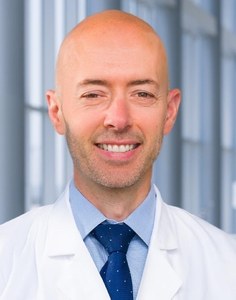 Portrait: UT Southwestern Medical Center
James Brugarolas is a physician-scientist at UT Southwestern Medical Center in Dallas. He directs the Kidney Cancer Program and is a professor in the Division of Hematology and Oncology. His interests include signalling mechanisms, resistance to targeted drugs, and the genetics of kidney cancer. He was elected to the American Society for Clinical Investigation in 2013 and is a principal investigator of the kidney cancer SPORE grant renewed in 2022.
BRU2004 was done at the Dana-Farber Cancer Institute in William Kaelin's laboratory, with Brugarolas as first author. Low oxygen is known to turn mTOR down, but the route was unknown. The study showed that it needs the TSC1/TSC2 complex and the gene REDD1, which is switched on by hypoxia. Cells lacking TSC2 kept growing under low oxygen, which fits TSC2 acting as a tumour suppressor.
The paper became a standard reference for how oxygen shortage reaches mTORC1, and it links the Atlas to later work on hypoxia and kidney cancer.
Milestones in the Atlas
A selection, not a full bibliography: only papers that meet the Atlas inclusion criteria.
| Year | Evidence | Study |
|---|---|---|
| 2004 | M | Regulation of mTOR function in response to hypoxia by REDD1 and the TSC1/TSC2 tumor suppressor complex BRU2004 First author of the study showing that hypoxia inhibits mTOR through REDD1 and the TSC1/TSC2 complex, independent of AMPK and LKB1. |
Co-authors in the Atlas
People with a profile here who share at least one study with James Brugarolas.
- William G. Kaelin Jr. Cancer researcher who worked out how cells sense oxygen through the VHL and HIF proteins, work recognised by the 2019 Nobel Prize in Physiology or Medicine.
Every researcher with a profile →
Thank you. Your answer was counted anonymously.
Thank you. That helps us know which pages have been read by someone who knows the work.
Thank you. We will check it and correct the page.