Ellen Kraig
Immunologist at UT Health San Antonio who studies how aging changes immune regulation and who led the first small safety trial of rapamycin in healthy older people at the Barshop Institute
Professor and Deputy Chair of Faculty Development, Department of Cell Systems and Anatomy, UT Health San Antonio · Barshop Institute for Longevity and Aging Studies · Distinguished Fellow, American Association of Immunologists · postdoc, Leroy Hood lab, Caltech · PhD, Brandeis University (Jim Haber lab)
Department of Cell Systems and Anatomy, UT Health San Antonio (San Antonio, Texas, USA) ↗
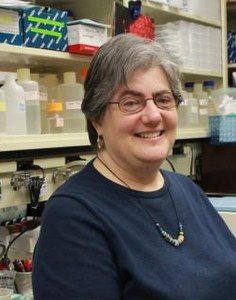 Portrait: The University of Texas System
Before anyone can test whether rapamycin slows human aging, someone has to show that healthy older people can take it safely. Ellen Kraig was first author of the 2018 trial in this Atlas (KRA2018) that asked this question. Twenty-five healthy adults aged 70 to 95 took low-dose rapamycin or a placebo every day for at least 8 weeks. The drug was generally well tolerated. There were small changes in red blood cell measures and no rise in blood glucose or insulin resistance. The trial was small and short, so it says nothing about long-term benefit, but it was early groundwork for larger aging trials.
Kraig trained in genetics and immunology. As a graduate student at Brandeis University in Jim Haber's lab Kraig studied mating type in yeast, and then joined Leroy Hood's lab at Caltech as a postdoc. At UT Health San Antonio Kraig is Professor and Deputy Chair of Faculty Development in the Department of Cell Systems and Anatomy. Kraig's research uses molecular and cellular assays to study how aging affects immune regulation, work developed with colleagues at the Barshop Institute. Kraig has also won several teaching awards, including a 2018 Regents' Outstanding Teaching Award, and was named a Distinguished Fellow of the American Association of Immunologists.
The question from the pilot trial continues. In 2026 UT Health San Antonio announced a larger randomized, placebo-controlled study of rapamycin and everolimus in about 84 healthy adults aged 65 to 90, co-led by Kraig with Dean Kellogg Jr. and Brett Ginsburg, to work out dosing and short-term effects in older people.
Milestones in the Atlas
A selection, not a full bibliography: only papers that meet the Atlas inclusion criteria.
| Year | Evidence | Study |
|---|---|---|
| 2018 | H | A randomized control trial to establish the feasibility and safety of rapamycin treatment in an older human cohort: Immunological, physical performance, and cognitive effects. KRA2018 First author: ran the randomized pilot trial showing that daily low-dose rapamycin was well tolerated by healthy adults aged 70 to 95 over 8 weeks. |
Co-authors in the Atlas 5
People with a profile here who share at least one study with Ellen Kraig.
ShowHide
- Adriana D. Benavides Immunologist who worked at UT Health San Antonio and the Children's Hospital of Philadelphia, and a co-author of the first small safety trial of rapamycin in healthy older people
- Dean L. Kellogg Jr. A geriatrician who co-leads clinical trials of rapamycin in older adults at the Barshop Institute, with a focus on safety and cardiovascular effects.
- Martin A. Javors Pharmacologist and professor at UT Health San Antonio who directs an analytical laboratory for biochemical and drug measurements, and a co-author of rapamycin studies in mice and in older people
- Nicolas Musi Endocrinologist and aging researcher who directs the Division of Endocrinology, Diabetes and Metabolism and the Diabetes and Aging Center at Cedars-Sinai, and who studies how aging drives insulin resistance, frailty and senescence
- Qianqian Liu Biostatistician on one of the first randomised pilot trials of rapamycin's safety in older adults
Every researcher with a profile →
Thank you. That helps us know which pages have been read by someone who knows the work.
Thank you. We will check it and correct the page.
Thank you. Your answer was counted anonymously.