Blake B. Rasmussen
Muscle physiologist who studies how mTORC1 and nutrient signaling control muscle growth and loss in people, including during exercise and aging.
Professor and Chair, Cellular & Integrative Physiology, UT Health San Antonio (chair since 2024)
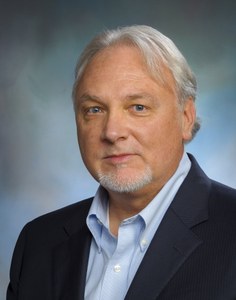 Portrait: UT Health San Antonio
Blake Rasmussen is a professor and, since 2024, chair of the Department of Cellular and Integrative Physiology at UT Health San Antonio. His lab studies muscle growth and wasting in aging and disease, using human studies and transgenic mice.
The 2009 Journal of Physiology study in the Atlas, led by Micah Drummond, asked whether mTORC1 is really needed for muscle to build protein after exercise in people. Volunteers took rapamycin before a bout of resistance exercise.
Rapamycin blocked the normal rise in muscle protein synthesis after exercise, and blunted several downstream mTORC1 signals. This was direct evidence in humans that mTORC1 helps drive the muscle response to exercise.
Milestones in the Atlas
A selection, not a full bibliography: only papers that meet the Atlas inclusion criteria.
| Year | Evidence | Study |
|---|---|---|
| 2009 | H | Rapamycin administration in humans blocks the contraction-induced increase in skeletal muscle protein synthesis DRU2009 Rapamycin taken before resistance exercise blocked the contraction-induced rise in human muscle protein synthesis; Rasmussen is senior (last) author. |
| 2026 | A | Constitutive mTORC1 Activation in Skeletal Muscle Increases Inflammation but is not Sufficient to Impair Glucose Tolerance. MARCHANT2026 Senior author: constant mTORC1 activity in mouse muscle raised inflammation but did not by itself impair glucose tolerance (mice). |
Co-authors in the Atlas 2
People with a profile here who share at least one study with Blake B. Rasmussen.
ShowHide
- Erik D. Marchant Graduate student in Blake Rasmussen's lab in San Antonio who studies what overactive mTORC1 in skeletal muscle does to metabolism, inflammation and exercise adaptation in aging and overnutrition
- Micah J. Drummond Muscle physiologist at the University of Utah who studies why older muscle wastes during inactivity and recovers poorly, and who showed that mTORC1 drives part of the protein-building response to exercise in humans
Every researcher with a profile →
Thank you. That helps us know which pages have been read by someone who knows the work.
Thank you. We will check it and correct the page.
Thank you. Your answer was counted anonymously.