Björn Stork
Heisenberg Professor for the molecular biology of cellular stress responses at Heinrich Heine University Düsseldorf, who studies the ULK1 complex, the switch that starts autophagy, and how it is wired to the energy sensor AMPK and to mTOR
Heisenberg Professor (W2), Molecular Biology of Cellular Stress Responses, Medical Faculty, Heinrich Heine University Düsseldorf (since 2017) · Group leader, Institute of Molecular Medicine I, Düsseldorf (2011–2017) · Junior group leader, University of Tübingen (2006–2011) · PhD, Bielefeld, Göttingen and Kansai Medical University, Osaka (2002–2006)
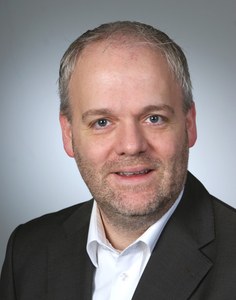 Portrait: 11th International Symposium on Autophagy 2025 (ASN Events)
Autophagy, the cell's self-digestion system, is started by a protein kinase called ULK1. When energy runs low, the energy sensor AMPK switches ULK1 on, and when nutrients are plentiful mTORC1 switches it off. In LOF2011, from Björn Stork's group, then at the University of Tübingen, Antje Löffler and colleagues found that the signal also runs backwards: ULK1 adds phosphate groups to AMPK and dampens its activity. This makes a negative feedback loop, a built-in way for the autophagy machinery to limit the signal that started it, rather than a one-way switch. The work was done in cell and biochemical experiments.
Stork studied biochemistry in Bielefeld, with a semester at McGill University in Montreal, and did a PhD in biochemistry and molecular immunology from 2002 to 2006 under J. Wienands and T. Kurosaki, with the work split between Bielefeld, Göttingen and Kansai Medical University in Osaka. From 2006 to 2011 Stork led a junior research group at the University of Tübingen, where LOF2011 was done, and then moved to the Institute of Molecular Medicine I at Heinrich Heine University Düsseldorf as a group leader, completing the habilitation (the German qualification to teach and supervise at university level) in molecular medicine there in 2013. In 2015 the team mapped the short stretch of the protein ATG13 that holds ULK1 in place and found that cells lacking this contact still keep some autophagy, which points to routes that bypass the usual ULK1-ATG13 link.
Since 2017 Stork has held a Heisenberg Professorship, a German research council post for established researchers, for the molecular biology of cellular stress responses at the Düsseldorf medical faculty. The group's central theme is how signals switch autophagy on and off, with the longer-term aim of using autophagy control in cancer, infection and nerve development. In 2026, as senior author, Stork reported that human induced pluripotent stem cells and nerve progenitor cells have working autophagy machinery but do not switch it on after low-dose DNA damage, unlike many cancer cell lines.
Milestones in the Atlas
A selection, not a full bibliography: only papers that meet the Atlas inclusion criteria.
| Year | Evidence | Study |
|---|---|---|
| 2011 | M | Ulk1-mediated phosphorylation of AMPK constitutes a negative regulatory feedback loop LOF2011 Senior author: led the study showing that ULK1 phosphorylates and inhibits AMPK, forming a negative feedback loop in autophagy signalling. |
Co-authors in the Atlas 3
People with a profile here who share at least one study with Björn Stork.
ShowHide
- Antje S. Löffler Cell biologist who worked in Björn Stork's group on how the autophagy kinase ULK1 talks back to the energy sensor AMPK
- Dario R. Alessi Co-discovered PDK1, the master kinase that switches on Akt and related AGC kinases, and showed that mTORC2 activates the kinase SGK1
- Mondira Kundu Physician-scientist who works out what the autophagy-initiating kinases ULK1 and ULK2 actually do when a cell runs short of fuel
Every researcher with a profile →
Thank you. That helps us know which pages have been read by someone who knows the work.
Thank you. We will check it and correct the page.
Thank you. Your answer was counted anonymously.