Yong-Keun Jung
Studies programmed cell death and autophagy and their roles in ageing and disease, including mice with extra copies of the autophagy gene Atg5 that live longer.
Professor, School of Biological Sciences, Seoul National University (since 2005) · earlier Professor, Gwangju Institute of Science and Technology (1996–2005)
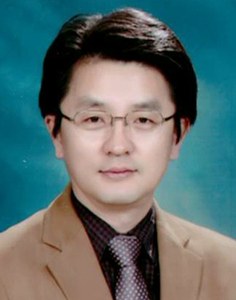 Portrait: School of Biological Sciences, Seoul National University
Yong-Keun Jung is a professor of biological sciences at Seoul National University in South Korea. According to his lab page, he trained for his PhD at the Albert Einstein College of Medicine, did postdoctoral work at Harvard Medical School, and was a professor at the Gwangju Institute of Science and Technology before moving to Seoul. His lab studies genes that control cell death, and autophagy and its role in ageing.
Autophagy is the cell's recycling system, and mTOR is one of its main brakes. The study in the Atlas, led by Jong-Ok Pyo, asked whether turning autophagy up is enough to extend lifespan in a mammal. The team made mice with extra copies of Atg5, a protein needed to build the autophagosome, the recycling bubble.
These mice had more autophagy, lived about 17 percent longer in median lifespan, were leaner and were more sensitive to insulin. Their cells also resisted oxidative damage better, and blocking autophagy removed that protection.
Milestones in the Atlas
A selection, not a full bibliography: only papers that meet the Atlas inclusion criteria.
| Year | Evidence | Study |
|---|---|---|
| 2013 | A | Overexpression of Atg5 in mice activates autophagy and extends lifespan PYO2013 Showed that moderate overexpression of Atg5 raises autophagy and extends median lifespan of mice by about 17 percent, with leanness and better insulin sensitivity. Jung is the senior author. |
Co-authors in the Atlas 1
People with a profile here who share at least one study with Yong-Keun Jung.
ShowHide
- Jong-Ok Pyo Autophagy researcher in Yong-Keun Jung's group in Korea, and first author of the 2013 study in which mice with an extra dose of the autophagy gene Atg5 lived longer
Every researcher with a profile →
Thank you. That helps us know which pages have been read by someone who knows the work.
Thank you. We will check it and correct the page.
Thank you. Your answer was counted anonymously.