Yanhui Xu
Structural biologist whose Fudan lab solved a cryo-EM structure of human mTORC2 in 2018, showing how rictor and mSin1 block rapamycin's access to mTOR
Professor & Principal Investigator · Fudan University Shanghai Cancer Center – structural biology of mTOR signaling and transcription
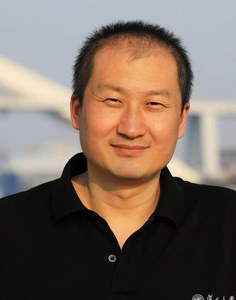 Portrait: Fudan University
Yanhui Xu is a professor at Fudan University Shanghai Cancer Center and one of China's most prominent structural biologists, using cryo-EM and biochemistry to determine how large multi-protein machines assemble and function.
On mTOR specifically, his lab, with Hong-Wei Wang's group at Tsinghua, reported a 4.4 angstrom cryo-EM structure of human mTORC1 in 2016 (the first cryo-EM structure of human mTORC1 came from the Basel/Zurich groups of Michael Hall, Nenad Ban and Timm Maier) and then, in the 2018 Cell Research paper verified here, one of the first two cryo-EM structures of human mTORC2, published in parallel with the Basel/Zurich groups — revealing a hollow, two-fold-symmetric dimer in which Rictor and mSin1 sterically block FKBP12-rapamycin from binding mTOR, explaining mTORC2's relative rapamycin insensitivity compared with mTORC1.
His earlier work solved structures underlying DNA methylation, and since 2020 his group has published four papers in Science resolving the complete transcription pre-initiation complex — work named one of 'China's Top 10 Advances in Life Sciences' for 2021, and for which he received the 2021 Xplorer Prize from the Tencent Foundation.
Milestones in the Atlas
| Year | Evidence | Study |
|---|---|---|
| 2018 | M | Cryo-EM structure of human mTOR complex 2 CHE2018 Co-corresponding author; his team determined one of the first two cryo-EM structures of human mTORC2 (in parallel with Stuttfeld et al., eLife 2018), revealing the Rictor/mSin1 architecture that explains its rapamycin insensitivity relative to mTORC1. |