Timothy J. Sargeant
Studies lysosomal recycling and autophagy in ageing and Alzheimer's disease, and develops ways to measure autophagy flux in people.
Associate Professor and Head, Lysosomal Health in Ageing, SAHMRI (since 2015) · School of Pharmacy and Biomedical Science, Adelaide University
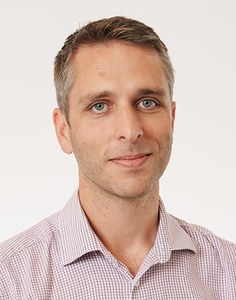 Portrait: South Australian Health and Medical Research Institute (SAHMRI)
Tim Sargeant heads the Lysosomal Health in Ageing group at SAHMRI in Adelaide. He completed a PhD in neuroscience at Victoria University of Wellington and did two postdoctoral positions at the University of Cambridge before starting his group in 2015.
His group studies how the cell's recycling system, the lysosome, is damaged in diseases such as Alzheimer's and how to measure and improve that recycling in humans.
The trial in this Atlas tested a common idea from animal work: eating less protein lowers mTORC1 and should switch on autophagy. In 63 healthy adults who ate average-protein and reduced-protein diets for four weeks each, autophagic flux in blood cells did not change. The result suggests that cutting protein alone may not be enough to boost autophagy in human blood.
Milestones in the Atlas
A selection, not a full bibliography: only papers that meet the Atlas inclusion criteria.
| Year | Evidence | Study |
|---|---|---|
| 2026 | H | Reduced dietary protein intake does not alter autophagy in human blood: A randomized crossover study in healthy adults SIN2026 Randomised crossover trial in 63 healthy adults showing that four weeks of reduced protein intake did not change autophagic flux in blood cells; Sargeant is the senior and corresponding author. |
Every researcher with a profile →
Thank you. Your answer was counted anonymously.
Thank you. That helps us know which pages have been read by someone who knows the work.
Thank you. We will check it and correct the page.