Sebastian I. Arriola Apelo
Showed that giving rapamycin intermittently rather than daily lessens its effects on glucose metabolism and the immune system in mice
Associate Professor, Department of Animal and Dairy Sciences, University of Wisconsin–Madison
Arriola Apelo Lab, Department of Animal and Dairy Sciences, University of Wisconsin–Madison (Madison, Wisconsin, USA) ↗ ORCID0000-0003-0274-5367 ↗
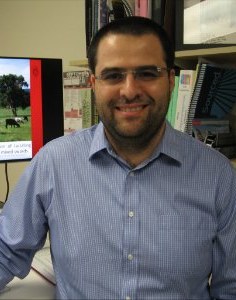 Portrait: Arriola Apelo Lab, University of Wisconsin–Madison
Sebastian Arriola Apelo now runs his own lab at UW-Madison studying nutrient metabolism and mTOR signaling, but this study was done while he was working in Dudley Lamming's lab, on one of the more practical problems in the rapamycin field: the drug extends lifespan in mice by blocking mTORC1, but it also causes glucose intolerance and weakens the immune system by blocking a second mTOR complex, mTORC2, that's much less sensitive to the drug.
The team tested whether the dosing pattern itself — daily versus intermittent dosing, or swapping in related drugs like everolimus and temsirolimus — could separate the two effects. They found an intermittent dosing schedule that still inhibited mTORC1 effectively while largely sparing glucose tolerance and immune function, suggesting the drug's downsides aren't an unavoidable package deal with its benefits.
Milestones in the Atlas
| Year | Evidence | Study |
|---|---|---|
| 2015 | A | Alternative rapamycin treatment regimens mitigate the impact of rapamycin on glucose homeostasis and the immune system ARR2015 Led the study showing that intermittent rapamycin dosing, or swapping in related drugs like everolimus, can preserve mTORC1 inhibition while reducing the drug's impact on blood sugar (and, for the intermittent schedule, on immune function). |
Co-authors in the Atlas
People with a profile here who share at least one study with Sebastian I. Arriola Apelo.
- Dudley W. Lamming Showed as a postdoc that rapamycin's harm to glucose metabolism comes largely from its effect on mTORC2, while the lifespan benefit tracks mTORC1. His Wisconsin lab studies intermittent rapamycin dosing and how restricting dietary protein or single amino acids affects metabolism and ageing