Russell G. Jones
Studies how nutrient and energy sensing by AMPK and mTOR shapes cell metabolism, especially in T cells and cancer. As a postdoc with Craig Thompson he showed that AMPK triggers a p53-dependent glucose checkpoint in the cell cycle
Chair and Professor, Department of Metabolism and Nutritional Programming, Van Andel Institute (since 2018) · Assistant then Associate Professor, Goodman Cancer Research Centre, McGill University · postdoc with Craig Thompson, University of Pennsylvania · PhD with Pamela Ohashi, University of Toronto
Jones Lab, Department of Metabolism and Nutritional Programming, Van Andel Institute (Grand Rapids, Michigan, USA) ↗ Lab lineagetrained under Craig B. Thompson →
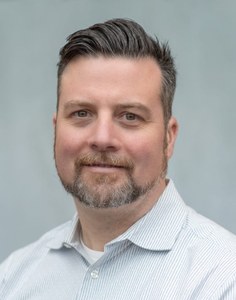 Portrait: Van Andel Institute
Russell Jones was first author of the Atlas study showing that proliferating cells stop at the G1/S boundary when glucose runs short, even with amino acids present and mTOR active, and that this arrest needs AMPK to phosphorylate p53 on serine 15 (JON2005). The checkpoint runs in parallel to mTOR rather than through it.
Jones earned his PhD in Medical Biophysics at the University of Toronto with Pamela Ohashi and did his postdoctoral work with Craig Thompson at the University of Pennsylvania. He then ran a lab at McGill University's Goodman Cancer Research Centre before moving to the Van Andel Institute in 2018, where he chairs the Department of Metabolism and Nutritional Programming.
Milestones in the Atlas
A selection, not a full bibliography: only papers that meet the Atlas inclusion criteria.
| Year | Evidence | Study |
|---|---|---|
| 2005 | M | AMP-activated protein kinase induces a p53-dependent metabolic checkpoint JON2005 First author: showed that AMPK activates p53 to stop the cell cycle when glucose is scarce, independently of mTOR. |
| 2009 | A | Enhancing CD8 T-cell memory by modulating fatty acid metabolism PEA2009 Co-author: showed that CD8 T cells lacking TRAF6 fail to switch on fatty acid oxidation and form almost no memory cells, and that metformin or rapamycin increases memory CD8 T-cell formation in mice. |
Co-authors in the Atlas
People with a profile here who share at least one study with Russell G. Jones.
- Craig B. Thompson Cancer biologist whose lab studies how growth signals control the uptake and use of nutrients; senior author of the study that described an AMPK- and p53-dependent glucose checkpoint in the cell cycle
- Erika L. Pearce Immunologist who studies how metabolism controls T-cell fate. As a postdoc at Penn she showed in mice that drugs that raise fatty acid oxidation, metformin and rapamycin, increase CD8 memory T cells
- Yongwon Choi Immunologist who studies TRAF6 and RANKL (TRANCE) signalling at the junction of the immune and skeletal systems; senior author of the study linking TRAF6 and fatty acid oxidation to CD8 T-cell memory
Every researcher with a profile →
Thank you. Your answer was counted anonymously.
Thank you. That helps us know which pages have been read by someone who knows the work.
Thank you. We will check it and correct the page.