Ronjon Chakraverty
Haematologist and transplant immunologist who studies why T cell immunotherapies succeed or fail, including how tuning T cell metabolism through mTORC1 changes their function.
Professor of Haematology, University of Oxford (since 2020) · University College London (2005–2020; Professor from 2013)
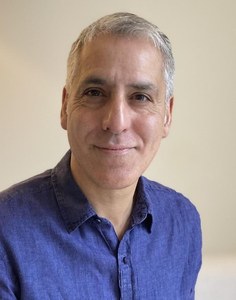 Portrait: MRC Weatherall Institute of Molecular Medicine, University of Oxford
Ronjon Chakraverty is a doctor and scientist who treats patients who receive bone marrow transplants and studies the immune cells that are used as therapy. He trained in medicine at the University of Birmingham and completed a PhD at the Weatherall Institute of Molecular Medicine in Oxford, followed by postdoctoral work with Megan Sykes at Harvard Medical School.
He moved to University College London in 2005 and became a professor there in 2013. In 2020 he joined the University of Oxford as Professor of Haematology, where he also helps run first-in-human trials of advanced cell and gene therapies.
His group asks why T cell treatments for cancer work in some patients and fail in others. One idea is to boost the metabolism of therapeutic T cells. In the study in this Atlas, his team turned up mTORC1 in helper CD4+ T cells by overexpressing RHEB. The cells lasted longer after transfer, but many became exhausted, so the boost was a trade-off.
Milestones in the Atlas
A selection, not a full bibliography: only papers that meet the Atlas inclusion criteria.
| Year | Evidence | Study |
|---|---|---|
| 2026 | A | Enforcing mTORC1 activity in therapeutic CD4+ T cells promotes persistence but eventual immune exhaustion SIL2026 Showed that forcing mTORC1 activity on with RHEB in therapeutic CD4+ T cells increased persistence after transfer but led to exhaustion and weaker tumour clearance; Chakraverty is the senior author. |
Co-authors in the Atlas 1
People with a profile here who share at least one study with Ronjon Chakraverty.
ShowHide
- Francesca Sillito Haematologist at the Royal Marsden Hospital and University College London with a special interest in CAR-T cell therapy and lymphoma, whose PhD showed that forcing mTORC1 on in CD4+ T cells makes them last longer but tire out
Every researcher with a profile →
Thank you. That helps us know which pages have been read by someone who knows the work.
Thank you. We will check it and correct the page.
Thank you. Your answer was counted anonymously.