Rafi Ahmed
Immunologist who studies T-cell and B-cell memory and showed that mTOR is a major regulator of memory CD8 T-cell formation.
Director, Emory Vaccine Center · Professor of Microbiology and Immunology, Emory University · Georgia Research Alliance Eminent Scholar · Member, US National Academy of Sciences
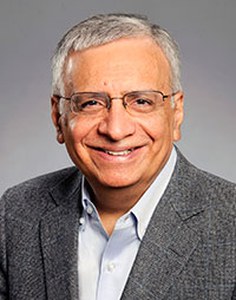 Portrait: Emory Vaccine Center
Rafi Ahmed directs the Emory Vaccine Center and is a professor of microbiology and immunology at Emory University in Atlanta. His lab studies immune memory in T cells and B cells, with the aim of building better vaccines and treatments. He is a member of the US National Academy of Sciences.
His group is also known for showing that the receptor PD-1 helps T cells become exhausted during long-lasting viral infections, which led to PD-1 blocking antibodies being tried in infections and cancer.
The 2009 study in the Atlas, published in Nature, found that mTOR helps decide which CD8 T cells become long-lived memory cells. Surprisingly, rapamycin, usually seen as an immune suppressor, improved the number and quality of memory T cells in virus-infected mice, and in vaccinated monkeys.
Milestones in the Atlas
A selection, not a full bibliography: only papers that meet the Atlas inclusion criteria.
| Year | Evidence | Study |
|---|---|---|
| 2009 | A | mTOR regulates memory CD8 T-cell differentiation ARA2009 Showed that mTORC1 acts inside CD8 T cells to control memory differentiation and that rapamycin treatment improves memory responses to infection and vaccines; Ahmed was senior author. |
Co-authors in the Atlas 1
People with a profile here who share at least one study with Rafi Ahmed.
ShowHide
- Koichi Araki Immunologist in Rafi Ahmed's group at Emory who discovered that rapamycin improves memory killer T cells, a finding that linked mTOR to vaccine design
Every researcher with a profile →
Thank you. That helps us know which pages have been read by someone who knows the work.
Thank you. We will check it and correct the page.
Thank you. Your answer was counted anonymously.