Nicholas T. Ktistakis
Uses live imaging to follow the first minutes of autophagy and of mTORC1 activation
Group Leader, Signalling Programme, Babraham Institute, Cambridge (since 1996)
Ktistakis Group, Signalling Programme, Babraham Institute (Cambridge, England, United Kingdom) ↗
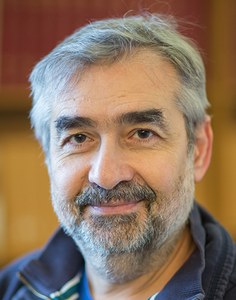 Portrait: Babraham Institute
Nicholas Ktistakis was a postdoctoral researcher and then an instructor at UT Southwestern Medical Center in Dallas before starting his group at the Babraham Institute in Cambridge in 1996. His lab studies how autophagy begins — how the membrane that will engulf cellular material first forms — and the signals that switch it on and off.
In 2016 the group imaged the mTORC1 component RAPTOR in living cells and found that mTORC1 moves to lysosomes within two minutes of adding amino acids and peaks within five, while its classic targets are phosphorylated later. That gap suggests mTORC1 passes through the lysosome only briefly before acting on substrates elsewhere.
Milestones in the Atlas
| Year | Evidence | Study |
|---|---|---|
| 2016 | M | Dynamics of mTORC1 activation in response to amino acids MAN2016 Senior author: live imaging of mTORC1 lysosomal translocation within minutes of amino acid addition. |