Marikki Laiho
Studies DNA damage, the nucleolar stress response and how RNA polymerase I (which makes ribosomal RNA) can be targeted in cancer.
Johns Hopkins University School of Medicine · Willard and Lillian Hackerman Professor of Radiation Oncology; Director, Division of Molecular Radiation Sciences · part-time Professor, University of Helsinki
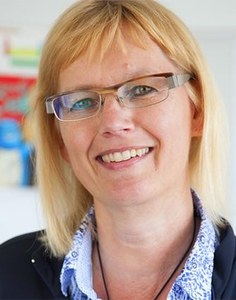 Portrait: Johns Hopkins University (The Hub)
Marikki Laiho is a professor of radiation oncology and molecular radiation sciences at Johns Hopkins University School of Medicine and co-director of a cancer chemical and structural biology programme at the Sidney Kimmel Comprehensive Cancer Center. Her lab studies how cells react to DNA damage and how the making of ribosomes can be targeted in cancer.
Ribosomes are the cell's protein factories, and fast-growing cancer cells need many of them. In the 2026 Genes & Development paper in the Atlas (first author Wenjun Fan), the team blocked RNA polymerase I and screened the genome for genes that let cancer cells survive this. Switching off mTOR was one of them.
This was surprising because mTOR is usually seen as a driver of growth. The authors found that mTORC1 inhibition did not restore ribosome production. Instead it moved the few remaining ribosomes away from 5'TOP mRNAs and toward transcripts needed for survival, which they call 'translational fitness'. This was shown in cancer cells in the lab.
Milestones in the Atlas
A selection, not a full bibliography: only papers that meet the Atlas inclusion criteria.
| Year | Evidence | Study |
|---|---|---|
| 2026 | M | mTOR inactivation governs adaptive survival to ribosome biogenesis deficiency FAN2026 Genome-wide screens showed mTORC1 inhibition lets cancer cells survive ribosome biogenesis deficiency by redirecting scarce ribosomes to survival transcripts; Laiho was senior and corresponding author. |
Co-authors in the Atlas
People with a profile here who share at least one study with Marikki Laiho.
- Rachel Green Biochemist who studies how the ribosome works and how cells detect and rescue stalled or colliding ribosomes, including links to the integrated stress response
Every researcher with a profile →
Thank you. Your answer was counted anonymously.
Thank you. That helps us know which pages have been read by someone who knows the work.
Thank you. We will check it and correct the page.