Leif W. Ellisen
Physician-scientist whose lab studies REDD1, a stress-induced inhibitor of mTORC1, and showed how hypoxia uses REDD1 to release TSC2 from 14-3-3 proteins
Professor of Medicine, Harvard Medical School · Clinician Investigator and physician in Hematology/Oncology, Massachusetts General Hospital · MD and PhD, Stanford University (1992)
Ellisen Lab, Mass General Cancer Center, Harvard Medical School (Boston, Massachusetts, USA) ↗ Lab lineage1 direct trainee →
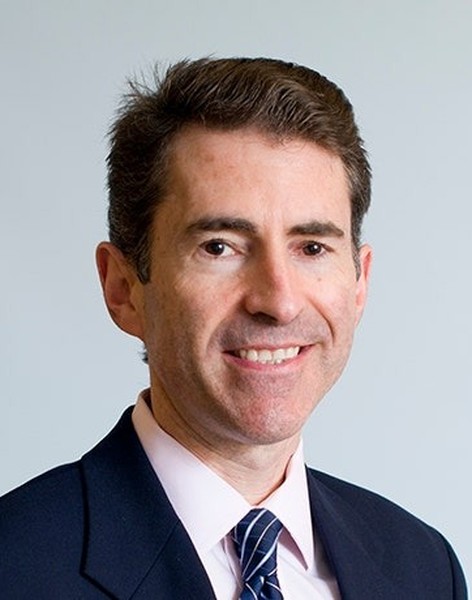 Portrait: Massachusetts General Brigham
Leif Ellisen was the senior author of the Atlas study showing that hypoxia switches off mTORC1 because REDD1 releases TSC2 from inhibitory 14-3-3 proteins, and that loss of REDD1 favours tumour growth in mice, with low REDD1 seen in a subset of human breast cancers (DEY2008).
Ellisen earned his MD and PhD at Stanford and leads a lab at the Mass General Cancer Center, where he is also a practising oncologist. His group studies tumour suppressor pathways, including p53-family proteins and REDD1, and how they shape cancer cell signalling and metabolism.
Milestones in the Atlas
A selection, not a full bibliography: only papers that meet the Atlas inclusion criteria.
| Year | Evidence | Study |
|---|---|---|
| 2008 | M | Hypoxia regulates TSC1/2-mTOR signaling and tumor suppression through REDD1-mediated 14-3-3 shuttling DEY2008 Senior author: showed that hypoxia inhibits mTORC1 through REDD1 and 14-3-3 release of TSC2, with tumour-suppressor effects in mice. |
Co-authors in the Atlas
People with a profile here who share at least one study with Leif W. Ellisen.
- M. Phillip DeYoung As a research fellow in Leif Ellisen's lab, was first author on the 2008 study showing that hypoxia switches off mTORC1 through REDD1 releasing TSC2 from 14-3-3 proteins
Every researcher with a profile →
Thank you. Your answer was counted anonymously.
Thank you. That helps us know which pages have been read by someone who knows the work.
Thank you. We will check it and correct the page.