Jack M. Parent
Neurologist and stem-cell researcher who rebuilds human epilepsies in patient-derived neurons to find what goes wrong
William J. Herdman Professor of Neurology, University of Michigan Medical School (faculty since 2000) · Co-Director, Comprehensive Epilepsy Center, Michigan Medicine · Director, Human Stem Cell and Gene Editing Core, University of Michigan · Member, Michigan Neuroscience Institute · Staff Physician, VA Ann Arbor Healthcare System · Fellowship in Clinical Neurophysiology, UCSF (1996) · Residency in Neurology, UCSF (1994) · MD, Yale University School of Medicine (1990) · AB in Human Biology, Stanford University
Parent Lab, University of Michigan (Ann Arbor, Michigan, USA) ↗
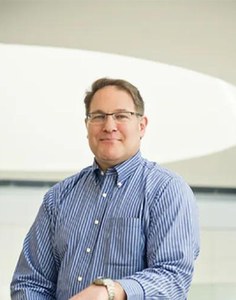 Portrait: University of Michigan Medical School
Focal cortical dysplasia is a patch of mis-built cortex that causes epilepsy which drugs usually cannot control, and in most cases it traces back to a mutation that arose in a few brain cells during development and left the mTOR pathway stuck in the on position. Parent is the senior author of the 2026 screen that went looking for the genes that normally hold that pathway down. The key design choice was the cell type: instead of cancer lines, the screen used human neurons made from induced pluripotent stem cells, because a gene that restrains mTOR in a tumour cell need not do the same job in a neuron.
That platform is Parent's long-standing contribution. He directs Michigan's Human Stem Cell and Gene Editing Core and has spent nearly two decades turning patient skin and blood cells into neurons and, more recently, into brain organoids, in order to model Dravet syndrome and other genetic epilepsies in a dish. Earlier in his career he showed that seizures themselves change the adult brain, driving new neuron birth and rewiring in the hippocampus.
He remains a practising epilepsy neurologist and co-directs Michigan's epilepsy centre, which is what gives the screen its clinical point. Two of the six hits, PIK3R3 and HIP1, already had a candidate disease-causing variant reported in tissue removed from a patient during epilepsy surgery, so the screen is effectively handing surgeons and geneticists a longer list of genes worth checking in that tissue.
Milestones in the Atlas
| Year | Evidence | Study |
|---|---|---|
| 2026 | M | Genome-wide CRISPRi screen in human iNeurons identifies novel negative mTOR regulator genes associated with focal cortical dysplasia TID2026 Senior and co-corresponding author; his laboratory and stem-cell core supplied the human iPSC-derived neuron platform and the focal cortical dysplasia framing that the screen was built around. |
Co-authors in the Atlas
People with a profile here who share at least one study with Jack M. Parent.
- Andrew M. Tidball Stem-cell neuroscientist who builds human neuron and organoid models to find the genes behind brain malformations