Andrew M. Tidball
Stem-cell neuroscientist who builds human neuron and organoid models to find the genes behind brain malformations
Research Assistant Professor of Neurology, University of Michigan Medical School (since 2019) · Member, Michigan Neuroscience Institute · Postdoctoral Fellow, University of Michigan (Jack Parent lab, 2014–2019) · PhD, Vanderbilt University (Aaron Bowman lab, 2014) · BS, Calvin College (2008)
Tidball Lab, University of Michigan (Ann Arbor, Michigan, USA) ↗
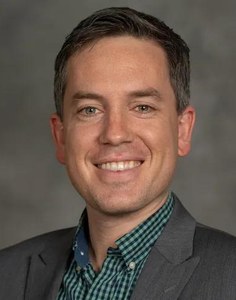 Portrait: University of Michigan Medical School
Tidball designed and ran the 2026 screen that is an unbiased, genome-wide hunt for brakes on mTOR carried out in human neurons. He converted induced pluripotent stem cells into neurons, then used CRISPR interference with a library of about 110,000 guide RNAs to turn down one gene at a time, and sorted the cells by how much phosphorylated S6 they carried, since that phospho-mark is the same biomarker pathologists use on focal cortical dysplasia tissue. Neurons that lit up brightly were the ones whose missing gene had been holding mTOR back.
Six genes came out of it: LRRC4, EIF3A, TSN, HIP1, PIK3R3 and URI1. Follow-up along the whole AKT-mTOR-S6 chain narrowed the list to PIK3R3 and HIP1 as the two that raise signalling at every step rather than only at the end, and each of those two had independently been reported with a candidate pathogenic variant in brain tissue resected from a patient. Knocking down any of the six also made the neurons indifferent to losing the growth factor GDNF, which normally keeps mTOR signalling switched on.
He came to this through two earlier stages. His Vanderbilt doctoral work with Aaron Bowman examined how neural progenitor cells handle manganese and how that feeds into ATM-p53 signalling, using Huntington's disease models; his postdoctoral years with Jack Parent were spent building stem-cell models of genetic epilepsies. His own laboratory now uses single-rosette brain organoids and CRISPR to study neural tube defects, focal cortical dysplasia and substances that disturb brain development before birth.
Milestones in the Atlas
| Year | Evidence | Study |
|---|---|---|
| 2026 | M | Genome-wide CRISPRi screen in human iNeurons identifies novel negative mTOR regulator genes associated with focal cortical dysplasia TID2026 First author and co-corresponding author; he built the human iNeuron CRISPRi platform, ran the genome-wide phospho-S6 FACS screen and validated the six hits. |
Co-authors in the Atlas
People with a profile here who share at least one study with Andrew M. Tidball.
- Jack M. Parent Neurologist and stem-cell researcher who rebuilds human epilepsies in patient-derived neurons to find what goes wrong