Ian G. Ganley
Showed, in one of three 2009 studies (alongside the Mizushima and Kim laboratories), that the ULK1–ATG13–FIP200 complex relays mTOR signalling to start autophagy, and studies how cells select damaged mitochondria for destruction
Professor of Cellular Homeostasis, MRC Protein Phosphorylation and Ubiquitylation Unit, University of Dundee (since 2022) · Programme Leader, MRC PPU, University of Dundee (2016–2022) · Group Leader, MRC PPU, University of Dundee (2010–2016) · Postdoctoral Fellow, Memorial Sloan Kettering Cancer Center (Xuejun Jiang lab) and Stanford University (Suzanne Pfeffer lab) (2002–2010) · PhD, University of Cambridge (Nick Ktistakis lab, 1998–2002) · Oxford GlycoSciences (1997–1998) · MBiochem, University of Oxford (1997) · Fellow, Royal Society of Edinburgh (2025) · Hooke Medal, British Society for Cell Biology (2025)
Ganley Lab, MRC Protein Phosphorylation and Ubiquitylation Unit, University of Dundee (Dundee, Scotland, United Kingdom) ↗ ORCID0000-0003-1481-9407 ↗
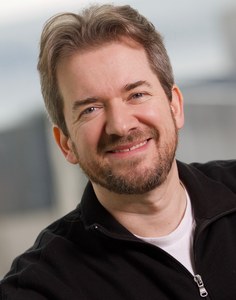 Portrait: MRC PPU, University of Dundee
When a cell runs out of nutrients it starts eating parts of itself, and the 2009 paper, one of three published that spring alongside papers from Noboru Mizushima's and Do-Hyung Kim's laboratories, identified the switchboard where that decision is made. Working as a postdoc in Xuejun Jiang's laboratory, Ganley showed that the kinase ULK1 does not act alone but sits in a complex with two partners, ATG13 and FIP200, and that all three are needed for starvation-induced autophagy. Removing either partner left ULK1 unstable and in the wrong place, unable to reach the site where a new autophagosome is born.
The crucial link to mTOR came from two directions. In cells, ULK1 and ATG13 were phosphorylated in a way that tracked nutrient supply, and in a reaction rebuilt from purified components ATG13 and FIP200 each boosted ULK1 kinase activity, with both needed for the full effect. That made the complex a node: mTOR writes phosphate marks onto it when food is plentiful, and releasing those marks when food is scarce lets ULK1 fire and autophagy begin.
Since setting up his own group in Dundee at the end of 2010, Ganley has focused on mitophagy, the selective removal of damaged mitochondria. His laboratory built the mito-QC reporter, a colour-changing tag that turns from yellow to red when a mitochondrion reaches the acidic interior of a lysosome, which made it possible to count mitophagy events in living tissue rather than only in cultured cells. Using it, his group has shown that a great deal of mitophagy happens routinely in healthy tissue and has traced how the common Parkinson's mutation LRRK2 G2019S interferes with it.
Milestones in the Atlas
| Year | Evidence | Study |
|---|---|---|
| 2009 | M | ULK1.ATG13.FIP200 complex mediates mTOR signaling and is essential for autophagy GAN2009 First author; he identified and reconstituted the ULK1-ATG13-FIP200 complex and showed that ULK1 and ATG13 are phosphorylated through the mTOR pathway in a nutrient-dependent manner. |
Every researcher with a profile →
On the programme
Meetings in the Atlas calendar where Ian G. Ganley is listed among the speakers or organisers.
- upcoming 13th CFATG Scientific Days on Autophagy (Paris) 2026 ↗ 12–14 Oct 2026 · Paris, France · ★★
- past EMBO Workshop: Autophagy – Foundations, Functions and Physiology 2026 ↗ 6–11 Sep 2026 · Grenå, Denmark · ★★
- past International Autophagy Conference 2026 (Norwegian, German & UK Networks) ↗ 25–27 May 2026 · Oslo, Norway · ★★