Helene Knævelsrud
Autophagy researcher who studies how cells recycle their own material and how this process is regulated in development and disease, including cancer.
Group leader and Associate Professor, University of Oslo & Oslo University Hospital · ERC Starting Grant · member of The Young Academy of Norway
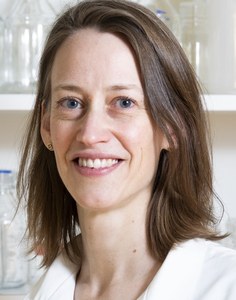 Portrait: Oslo University Hospital (Institute for Cancer Research)
Helene Knævelsrud leads a research group in Oslo that studies autophagy, the process by which cells break down and recycle their own parts. Her group page lists an ERC Starting Grant and membership in The Young Academy of Norway.
The study in this Atlas looks at Birt-Hogg-Dubé syndrome, an inherited condition caused by mutations in the FLCN gene that raises the risk of kidney tumours. Without FLCN, the transcription factor TFEB stays in the nucleus and mTORC1 signalling is overactive.
Her team found that overall autophagy still worked in patient-derived kidney cancer cells, but the protein p62 piled up in enlarged clusters. The same p62 build-up appeared in a cohort of Norwegian BHD kidney tumour samples.
Milestones in the Atlas
A selection, not a full bibliography: only papers that meet the Atlas inclusion criteria.
| Year | Evidence | Study |
|---|---|---|
| 2026 | M | FLCN loss is characterized by SQSTM1/p62 accumulation despite functional autophagy flux in Birt-Hogg-Dubé syndrome-associated kidney cancer ULL2026 Showed that FLCN loss in BHD kidney cancer cells keeps TFEB in the nucleus and mTORC1 overactive, yet autophagy flux is intact while p62 accumulates; Knævelsrud is the senior author. |
Every researcher with a profile →
Thank you. Your answer was counted anonymously.
Thank you. That helps us know which pages have been read by someone who knows the work.
Thank you. We will check it and correct the page.