Duojia Pan
Fly geneticist best known for work on the Hippo organ-size pathway. In 2002 his group reported that the Tsc1 and Tsc2 tumour suppressors act upstream of TOR to restrain S6K activity, in flies and mammalian cells
Chair, Department of Physiology, UT Southwestern Medical Center, and HHMI Investigator · Johns Hopkins University School of Medicine (2004–2016) · postdoc with Gerald Rubin, UC Berkeley (1993–1998) · PhD with Albert Courey, UCLA · member, National Academy of Sciences (2023)
Pan Lab, Department of Physiology, UT Southwestern Medical Center (Dallas, Texas, USA) ↗
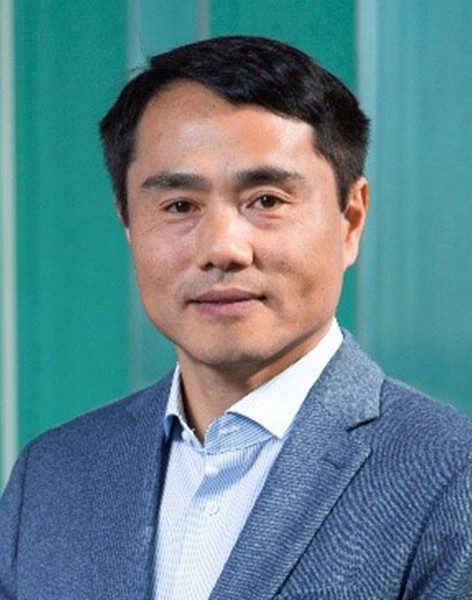 Portrait: UT Southwestern Medical Center
Duojia Pan was the senior author of the Atlas study showing that Tsc1 and Tsc2 can bind TOR and act upstream of it in fly genetic tests, and that cells lacking Tsc1 or Tsc2 keep S6K active even when amino acids are withdrawn (GAO2002). The amino-acid part of this model was later revised, as amino acid sensing was traced mainly to the Rag GTPases, but the placement of TSC upstream of TOR held.
Pan studied biochemistry at Peking University, earned his PhD at UCLA with Albert Courey and did postdoctoral work with Gerald Rubin at UC Berkeley. He started his lab at UT Southwestern in 1998, moved to Johns Hopkins in 2004 and returned to UT Southwestern in 2016 as chair of Physiology. His lab is widely known for its work on the Hippo signalling pathway that controls organ size.
Milestones in the Atlas
A selection, not a full bibliography: only papers that meet the Atlas inclusion criteria.
| Year | Evidence | Study |
|---|---|---|
| 2002 | M | Tsc tumour suppressor proteins antagonize amino-acid-TOR signalling GAO2002 Senior author: showed in Drosophila and mammalian cells that Tsc1-Tsc2 act upstream of TOR and that their loss keeps S6K active under amino acid starvation. |
Every researcher with a profile →
Thank you. Your answer was counted anonymously.
Thank you. That helps us know which pages have been read by someone who knows the work.
Thank you. We will check it and correct the page.