Cahir O'Kane
Fruit-fly geneticist at Cambridge who studies how the endoplasmic reticulum is built inside nerve fibres and how its failure causes hereditary spastic paraplegia, and who helped bring Drosophila models into David Rubinsztein's autophagy work
Professor of Genetics, Department of Genetics, University of Cambridge, and Fellow of Churchill College · postdoc, University of Basel (enhancer trapping in Drosophila) · PhD in bacterial genetics, Trinity College Dublin · BA in Genetics, University of Cambridge
O'Kane Lab, Department of Genetics, University of Cambridge (Cambridge, England, United Kingdom) ↗
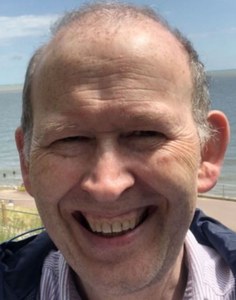 Portrait: Bluesky (@cahirokane.bsky.social)
Cahir O'Kane appears on three Atlas papers from David Rubinsztein's group, where O'Kane's lab supplied fruit-fly (Drosophila) genetics. RAV2004 showed that blocking mTOR switches on autophagy, the cell's self-cleaning system, which then cleared the toxic protein clumps of Huntington's disease and improved symptoms in flies given rapamycin and in mice given the related drug CCI-779. BER2006 extended this to several other aggregate-prone proteins in cultured cells and showed that rapamycin reduced the toxicity of human tau in flies. KOR2011 found that where the lysosome sits in the cell helps decide whether mTORC1, the growth-control complex, is on: with nutrients present lysosomes move to the cell edge and mTORC1 is active, while starvation pulls them towards the nucleus, mTORC1 falls and autophagy starts.
O'Kane studied genetics as an undergraduate at Cambridge and took a PhD in bacterial genetics at Trinity College Dublin. As a postdoc at the University of Basel O'Kane helped develop enhancer trapping in Drosophila, a method for finding where and when genes are switched on in the fly. O'Kane is now Professor of Genetics in the Department of Genetics at Cambridge and a Fellow of Churchill College.
The O'Kane lab uses Drosophila to study the endoplasmic reticulum (ER), a network of membrane tubes that runs along nerve axons. The group has linked several proteins that are mutated in hereditary spastic paraplegia, an inherited disease in which the longest nerve fibres slowly degenerate, to the formation of this axonal ER, and it images the network by light and electron microscopy.
Milestones in the Atlas
A selection, not a full bibliography: only papers that meet the Atlas inclusion criteria.
| Year | Evidence | Study |
|---|---|---|
| 2004 | A | Inhibition of mTOR induces autophagy and reduces toxicity of polyglutamine expansions in fly and mouse models of Huntington disease RAV2004 Co-author, providing fly genetics, on the paper showing that mTOR inhibition induces autophagy and reduces Huntington's disease toxicity in fly and mouse models. |
| 2006 | M | Rapamycin alleviates toxicity of different aggregate-prone proteins BER2006 Co-author, providing fly genetics, on the paper showing that rapamycin reduces the toxicity of several aggregate-prone proteins in cells and of human tau in Drosophila. |
| 2011 | M | Lysosomal positioning coordinates cellular nutrient responses KOR2011 Co-author on the paper showing that lysosome position inside the cell tunes mTORC1 activity and autophagy. |
Co-authors in the Atlas 6
People with a profile here who share at least one study with Cahir O'Kane.
ShowHide
- Brinda Ravikumar 2 shared studies First author of the 2004 study showing that switching off mTOR clears the toxic protein of Huntington disease by autophagy
- David C. Rubinsztein 2 shared studies Showed that rapamycin induces autophagy to clear the toxic protein of Huntington's disease, and that where lysosomes sit inside a cell helps set mTORC1 activity
- Fiona Menzies 2 shared studies Cell biologist who worked for many years in David Rubinsztein's Cambridge lab on autophagy and the clearance of disease proteins in neurodegeneration
- Viktor I. Korolchuk Showed that where lysosomes sit inside the cell tunes mTORC1 activity to nutrient supply. His Newcastle lab found that senescent cells can no longer switch mTORC1 off when nutrients or growth factors are withdrawn, and studies how autophagy and mitophagy decline with age
- Vojo Deretic Studies how autophagy shapes infection, immunity and inflammation, including early work showing that autophagy restricts Mycobacterium tuberculosis, and how galectins and TRIM proteins control mTOR and AMPK.
- Zdenek Berger Neuroscientist who, in David Rubinsztein's lab in Cambridge, showed that rapamycin-induced autophagy lowers the toxicity of several disease proteins that form clumps, including tau in fruit flies
Every researcher with a profile →
Thank you. That helps us know which pages have been read by someone who knows the work.
Thank you. We will check it and correct the page.
Thank you. Your answer was counted anonymously.