Bernardo L. Sabatini
Neurobiologist who studies how synapses and circuits change during development and learning; his lab showed that loss of Tsc1 in mouse hippocampal neurons weakens inhibitory input and tips circuits toward hyperexcitability.
Alice and Rodman W. Moorhead III Professor of Neurobiology, Harvard Medical School · HHMI Investigator (since 2008) · Co-director, Kempner Institute, Harvard · joined HMS faculty 2001 · postdoc with Karel Svoboda, Cold Spring Harbor Laboratory · MD (Harvard–MIT HST, 1999) and PhD (Neurobiology, Harvard Medical School)
Sabatini Lab, Department of Neurobiology, Harvard Medical School (Boston, Massachusetts, USA) ↗ Lab lineage1 direct trainee →
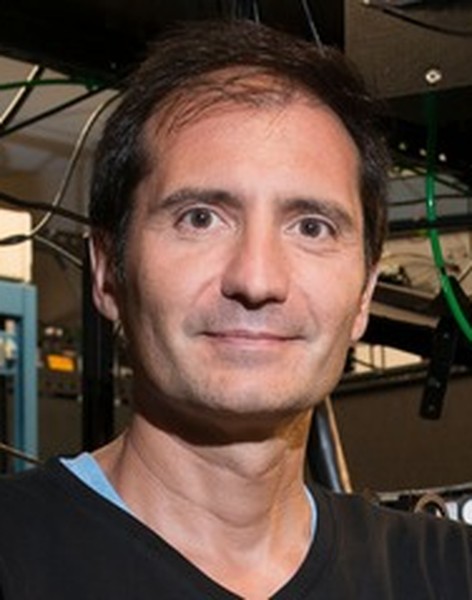 Portrait: Harvard Medical School, Department of Neurobiology
Bernardo Sabatini was senior author of the 2013 Neuron study led by Helen Bateup (BAT2013). Deleting Tsc1 in cultured mouse hippocampal neurons more than doubled network activity, and rapamycin brought it back to normal; many molecular changes in these cultures turned out to be responses to the extra activity rather than direct effects of mTOR. In hippocampal slices, single neurons lacking Tsc1 received weaker inhibitory input, which raised their excitation/inhibition ratio, and forebrain Tsc1 knockout mice had more severe chemically induced seizures. Seven days of rapamycin restored inhibition. The work is in mouse neurons and brain slices.
Bernardo Sabatini (not the mTOR biochemist David M. Sabatini, who has his own profile) trained in the Harvard–MIT MD/PhD programme and did a postdoc with Karel Svoboda at Cold Spring Harbor Laboratory. He joined Harvard Medical School in 2001; his lab uses optical methods, slice physiology and behaving mice to study cortex, hippocampus and basal ganglia, with an interest in circuit changes linked to autism and Parkinson's disease.
Milestones in the Atlas
A selection, not a full bibliography: only papers that meet the Atlas inclusion criteria.
| Year | Evidence | Study |
|---|---|---|
| 2013 | M | Excitatory/inhibitory synaptic imbalance leads to hippocampal hyperexcitability in mouse models of tuberous sclerosis BAT2013 Senior author: Tsc1 loss in mouse hippocampal neurons weakens inhibition and causes network hyperexcitability that rapamycin reverses. |
Co-authors in the Atlas
People with a profile here who share at least one study with Bernardo L. Sabatini.
- Helen S. Bateup Senior/corresponding author of a 2026 Nature study showing mTORC1 hyperactivity drives cell-autonomous astrocyte reactivity in tuberous sclerosis
Every researcher with a profile →
Thank you. Your answer was counted anonymously.
Thank you. That helps us know which pages have been read by someone who knows the work.
Thank you. We will check it and correct the page.