Bailey A. Knopf
Graduate student in Dudley Lamming's lab at the University of Wisconsin-Madison and first author of a 2026 review that sets out the hallmarks of protein and amino acid restriction in aging
Graduate student, Cellular and Molecular Biology program, University of Wisconsin-Madison (Lamming lab, Department of Medicine and William S. Middleton Memorial Veterans Hospital, papers from 2025) · BS in Cell and Developmental Biology, University of Iowa
Lamming Lab, Department of Medicine, University of Wisconsin-Madison (Madison, Wisconsin, USA) ↗
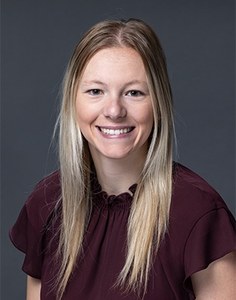 Portrait: University of Wisconsin-Madison (Cellular and Molecular Biology Graduate Program)
Bailey Knopf was first author of a 2026 review in Cell Press Blue (KNO2026) that asks what eating less protein does to an aging body. Across many organisms, cutting dietary protein, or only certain essential amino acids such as methionine, isoleucine and valine, improves metabolic health and can lengthen healthy life and lifespan. The review argues that the make-up of the protein, which amino acids it contains, matters as much as the amount, and that much of the effect runs through nutrient-sensing pathways, including mTORC1, the growth-control complex. Most of the evidence it summarises comes from animals.
Knopf is also a co-author of the Lamming lab's 2026 study on restricting single branched-chain amino acids in Alzheimer's model mice (BAB2025), in which cutting isoleucine or valine, but not leucine, improved metabolic health. PubMed lists about a dozen papers with Knopf's name since 2025, all from Lamming's group, including a 2025 preprint showing that the body's production of ketone bodies is not needed for the metabolic changes caused by calorie restriction in mice. Knopf studied cell and developmental biology at the University of Iowa (BS) and is now a graduate student in the Cellular and Molecular Biology program at the University of Wisconsin-Madison, doing doctoral research in the Lamming lab.
Milestones in the Atlas
A selection, not a full bibliography: only papers that meet the Atlas inclusion criteria.
| Year | Evidence | Study |
|---|---|---|
| 2026 | R | The hallmarks of protein and amino acid restriction in aging and longevity KNO2026 First author of this review defining the hallmarks of protein and amino acid restriction in aging. |
| 2026 | A | Restriction of individual branched-chain amino acids has distinct effects on the development and progression of Alzheimer's disease in 3xTg mice BAB2025 Co-author of the study restricting single branched-chain amino acids in Alzheimer's model mice. |
Co-authors in the Atlas 2
People with a profile here who share at least one study with Bailey A. Knopf.
ShowHide
- Dudley W. Lamming 2 shared studies Showed as a postdoc that rapamycin's harm to glucose metabolism comes largely from its effect on mTORC2, while the lifespan benefit tracks mTORC1. His Wisconsin lab studies intermittent rapamycin dosing and how restricting dietary protein or single amino acids affects metabolism and ageing
- Reji Babygirija Researcher in Dudley Lamming's lab at the University of Wisconsin-Madison who studies how restricting single amino acids in the diet affects metabolism, memory and Alzheimer's disease in mice
Every researcher with a profile →
Thank you. That helps us know which pages have been read by someone who knows the work.
Thank you. We will check it and correct the page.
Thank you. Your answer was counted anonymously.