Noboru Mizushima
Built much of the molecular map of autophagy in mammals - the ATG proteins that make an autophagosome, and the signals, including mTORC1, that decide when one is made
Professor, Department of Biochemistry and Molecular Biology, Graduate School of Medicine, University of Tokyo (since 2012) · Vice Dean, Graduate School and Faculty of Medicine, University of Tokyo (since 2021) · Professor, Department of Physiology and Cell Biology, Tokyo Medical and Dental University (2006–2012) · Laboratory Head, Department of Bioregulation and Metabolism, Tokyo Metropolitan Institute of Medical Science (2004–2006) · Postdoctoral fellow and Assistant Professor, Department of Cell Biology, National Institute for Basic Biology (1997–2004) · PhD, Tokyo Medical and Dental University (1991) · MD, Tokyo Medical and Dental University (1985) · JSPS Prize (2008), Uehara Prize (2016), Medal with Purple Ribbon (2021), Beth Levine Prize in Autophagy Research (2023)
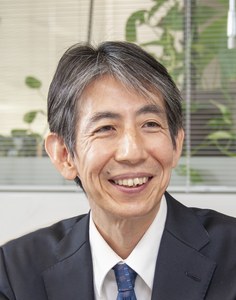 Portrait: Mizushima Lab, University of Tokyo
The 2009 study from Mizushima's laboratory, with Nao Hosokawa as first author and Mizushima as senior author, answered a question that had been open for a decade: everyone knew mTOR suppressed autophagy, but nobody knew how. His group, one of several that independently reported this complex in 2009 (others included the laboratories of Do-Hyung Kim and Xuejun Jiang), identified mammalian Atg13 and showed it sits in a roughly 3-megadalton complex with the kinase ULK1 and FIP200. When nutrients are plentiful, mTORC1 docks onto that complex through ULK1 and phosphorylates both ULK1 and Atg13, holding the autophagy starter switch down. Starve the cells, or add rapamycin, and mTORC1 lets go.
That paper is one step in a much longer project. In 1998, working in Yoshinori Ohsumi's laboratory, Mizushima was first author on the discovery that Atg12 is covalently attached to Atg5 by a ubiquitin-like conjugation system - the first ubiquitin-like conjugation system found in the autophagy pathway, and the finding that made autophagy a tractable molecular problem rather than a phenomenon seen under an electron microscope. He then carried the yeast genetics into mammals, identifying mammalian counterparts of several ATG proteins.
His laboratory also built the tools and the animals the whole field now uses: GFP-LC3 reporter mice that let you watch autophagosomes form in living tissue, and Atg5-deficient mice. Those mice produced one of the field's defining results, published in 2004 with Mizushima as senior author - newborn mice survive the hours between losing the placenta and their first milk by digesting their own proteins for amino acids, and without autophagy they die within a day.
Milestones in the Atlas
| Year | Evidence | Study |
|---|---|---|
| 2009 | M | Nutrient-dependent mTORC1 association with the ULK1-Atg13-FIP200 complex required for autophagy HOS2009 Senior author whose laboratory, in parallel with other groups in 2009, identified mammalian Atg13 and showed that mTORC1 physically joins the ULK1-Atg13-FIP200 complex and phosphorylates ULK1 to keep autophagy switched off. |
Every researcher with a profile →
On the programme
Meetings in the Atlas calendar where Noboru Mizushima is listed among the speakers or organisers.
- upcoming Keystone Symposia: Autophagy in Health and Disease – From Mechanisms to Therapeutics 2027 ↗ 8–11 Feb 2027 · Banff, AB, Canada · ★★
- past International Autophagy Conference 2026 (Norwegian, German & UK Networks) ↗ 25–27 May 2026 · Oslo, Norway · ★★