Masashi Narita
Studies what senescent cells do to the tissue around them, and showed that mTOR position, not just mTOR activity, sets their secretory output
Professor of Senobiology, Department of Oncology, University of Cambridge (since 2019) · Senior Group Leader, Cancer Research UK Cambridge Institute
Narita Group, Cancer Research UK Cambridge Institute (Cambridge, England, United Kingdom) ↗ ORCID0000-0001-7764-577X ↗
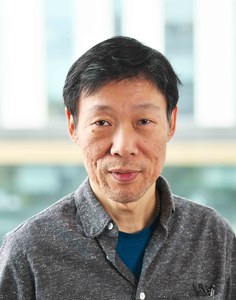 Portrait: Cancer Research UK Cambridge Institute
Narita's earlier work described senescence-associated heterochromatin foci, the chromatin rearrangement that locks a senescent cell out of the cell cycle. His group then moved to the harder question: a senescent cell is not simply switched off, it is doing something to its neighbours, and the secretory programme is the doing.
NAR2011 is where that meets mTOR. The group found the TASCC, a compartment at the trans-Golgi where autolysosomes and mTOR sit together, and showed that keeping mTOR out of it cuts IL-6/IL-8 synthesis. This is a specifically spatial claim: the same total amount of mTOR activity in the wrong place produces a different phenotype. It is the closest thing in this corpus to the question of how mTOR signalling is organised in space, alongside KOR2011 on lysosomal positioning.
For the Atlas the edge from mTORC1 to the senescent secretory phenotype had, until this paper was added, a single supporting study. NAR2011 supports the same claim by a different route, and bounds it: it explains how the secretome is fuelled, not whether suppressing it helps an animal.
Milestones in the Atlas
| Year | Evidence | Study |
|---|---|---|
| 2011 | M | Spatial coupling of mTOR and autophagy augments secretory phenotypes NAR2011 Senior author: spatial coupling of mTOR and autophagy at the TASCC drives the senescent secretory phenotype; disrupting mTOR localisation suppresses IL-6/8. |
Co-authors in the Atlas
People with a profile here who share at least one study with Masashi Narita.
- Masako Narita Discovered, as first author, the TASCC, a compartment in senescent cells where mTOR and autophagy work side by side to fuel the secretion of inflammatory proteins