J. Silvio Gutkind
Directs a research program using GPCR and PI3K/mTOR signaling to turn immune-cold head-and-neck tumors into immunotherapy-responsive ones
MSc Pharmacy (1980) & MSc Biochemistry (1983), MSc/PhD Pharmacy and Biochemistry, Univ. of Buenos Aires (1985) · Fogarty Fellow, NIH (1986–1989) · Chief, Oral and Pharyngeal Cancer Branch, NIDCR/NIH (1997–2015) · now Distinguished Professor & Chair, Pharmacology, UC San Diego; Co-Director, Head and Neck Cancer Center, Moores Cancer Center
Gutkind Lab, UC San Diego Moores Cancer Center ↗
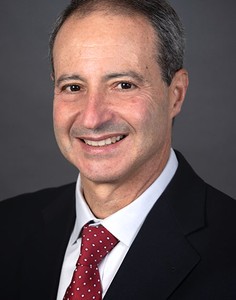 Portrait: UC San Diego
In 2009 (CAS2009), showed persistent Wnt signaling in skin switches on mTOR in epidermal stem cells, driving premature senescence — rapamycin rescued it. In 2026 (NAT2026), his UCSD team showed mTOR inhibitor everolimus reprograms the tumor microenvironment in TP53-mutant, immune-cold HNSCC — boosting T-cell/DC infiltration, cutting Tregs/MDSCs and PD-1/PD-L1.
Established that GPCRs can function as bona fide oncogenes — reshaped how the field thinks about growth-factor signaling in cancer. Led NIDCR's Oral and Pharyngeal Cancer Branch for ~2 decades.
Elected to National Academy of Medicine (2019); ACS Research Professor.
Milestones in the Atlas
| Year | Evidence | Study |
|---|---|---|
| 2009 | A | mTOR mediates Wnt-induced epidermal stem cell exhaustion and aging CAS2009 Wnt-induced mTOR activation drives epidermal stem-cell exhaustion; reversed by rapamycin. |
| 2026 | A | mTOR inhibition augments antitumor immune effector response by reprogramming the TP53-mutant, immune-cold HNSCC tumor microenvironment NAT2026 Everolimus reprograms the TP53-mutant HNSCC immune microenvironment, restoring T-cell cytotoxicity. |